It’s heating up! Sun, sweat, sprains and strains.
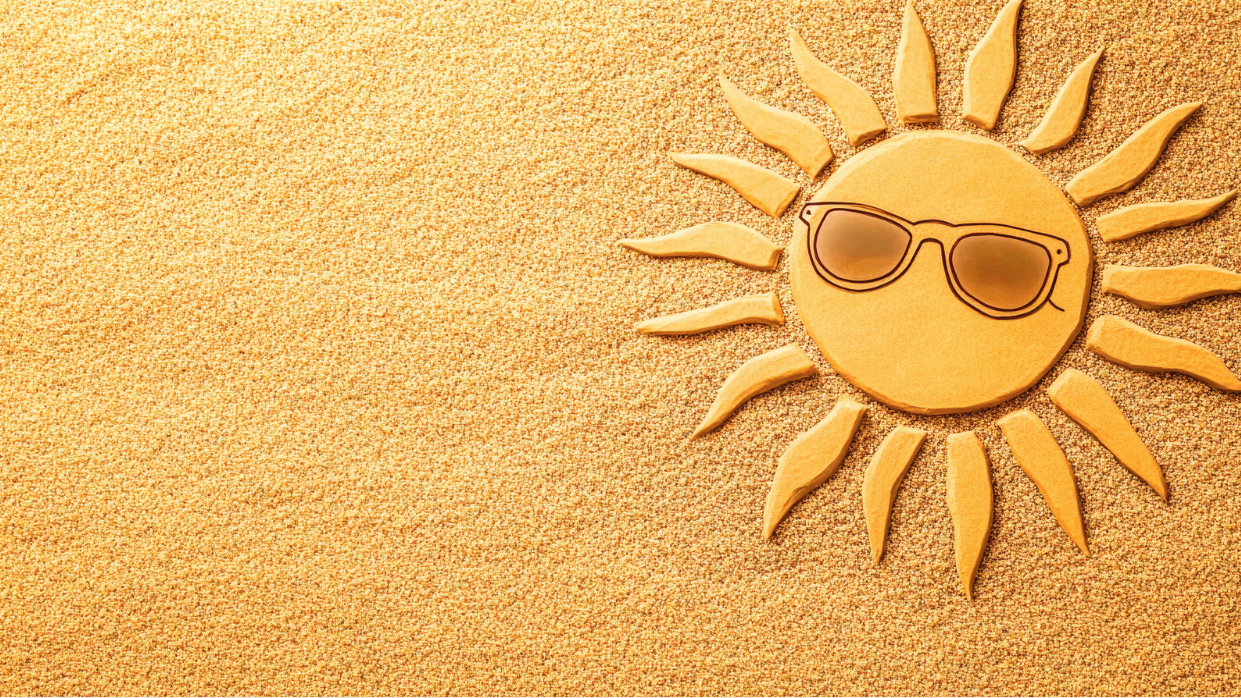
February in Aotearoa New Zealand often brings the most intense heat of the year. For those in manufacturing, construction, or primary industries, the sun isn't just a nuisance; it’s a genuine workplace hazard.
Environmental factors like heat and humidity do more than just make you thirsty and sweat a lot. They significantly increase the risk of musculoskeletal disorders (MSDs) and put a heavy strain on the mental wellbeing of your team.
When we talk about ergonomics, often, most people think about computer workstation setups, but it is much more than that. Ergonomics is also called human factors. It is a scientific discipline that looks to optimise human performance and wellbeing by ensuring that work fits the person, rather than forcing the person to fit the work. It takes a systems approach. This involves designing tasks, tools, and environments that match the capabilities and limitations of the human body and mind.
So, when it gets hot, how we interact with our work changes, and often not for the better. That’s where taking a systems approach to reduce the risk of sprains and strains comes in.
The physical connection: Heat and muscle fatigue
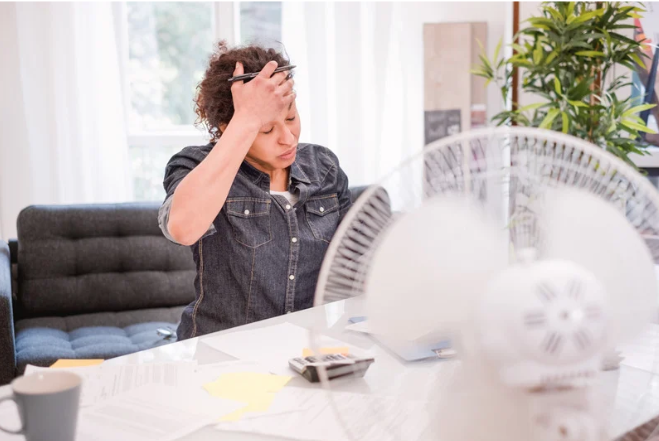
Heat stress is a major contributor to physical harm. When your body is fighting to stay cool, it has less energy to support your muscles and joints. This leads to faster rates of fatigue.
Fatigue is a significant risk factor for sprains and strains because it often goes unnoticed until an injury occurs. When a worker is tired, everything feels harder. Even if you work in an office with no or poor air conditioning, you would have noticed it is hard to concentrate or do simple tasks.
For those in physically demanding jobs, handling techniques or postures can deteriorate over the day, which is exacerbated by heat. Stabilising muscles can become exhausted, and sweaty hands can make it harder to grip tools, requiring more force to maintain control. This extra effort, combined with high temperatures, creates a perfect storm for sprains and strains.
The hidden link: Dehydration and injury risk
We often talk about drinking water to stay hydrated, and there is a good reason for this, as there is a direct link between hydration and musculoskeletal health. Our muscles, tendons, and the discs in our spine rely heavily on water to maintain their elasticity and shock-absorbing properties.
When workers become dehydrated, their tissues become less pliable and more prone to micro-tears. Dehydration also leads to a drop in blood volume, which means less oxygen is delivered to the muscles. Not only does this make a worker feel sluggish, but it reduces the physical resilience of their muscles and tendons, making them less capable of recovering from the repetitive loads of the day. Essentially, a dehydrated worker is a high-risk worker for acute sprains and strains.
Sometimes workers might actively avoid drinking the water they need. This might be because they want to avoid needing to urinate as often. In some workplaces it is inconvenient to stop work to remove layers of clothing or PPE, especially in hygiene-critical manufacturing. It could also be that the toilets are located too far away or, they are simply gross.
The caffeine and sugar trap
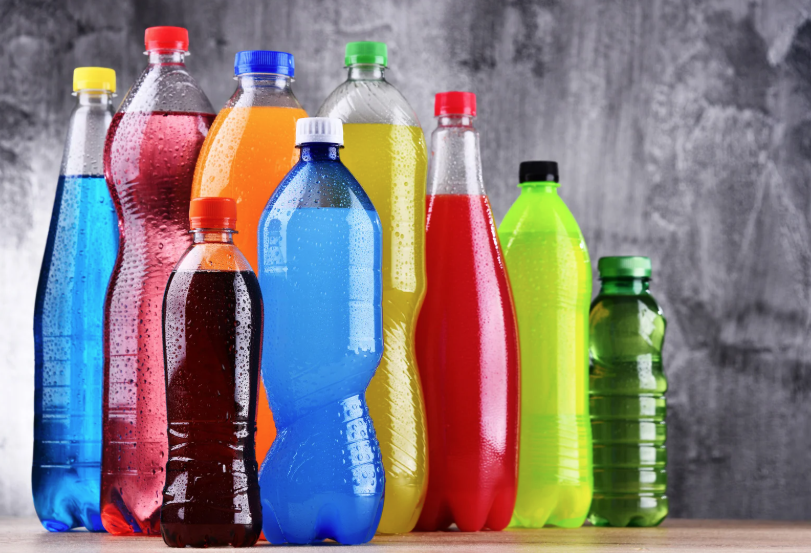
When energy levels dip in the heat, it’s tempting to grab an energy drink, a sugary soft drink, or an extra coffee. But these can make dehydration worse.
Many people don’t realise that most colas and citrus soft drinks contain caffeine. Caffeine is a mild diuretic, which means it encourages your body to lose more fluid. While a morning coffee is usually fine, consuming high amounts of caffeine throughout a hot day can accelerate fluid loss.
To put it in perspective, a standard 500ml energy drink can contain about 160mg of caffeine. That’s about the same as two standard cups of coffee. When you combine that much caffeine with the high sugar content (around 54g per can), you create a strain on your body’s fluid balance. High-sugar drinks require your body to use even more water just to process the sugar. This effectively diverts water away from your muscles when they need it most for cooling and repair. Relying on these drinks can also mask early physical cues of heat strain, such as a rapid heart rate. This means a worker might not recognise that their body is under pressure until they are already at high risk of injury or heat-related illness.
Moving beyond the physical: The psychosocial risks of heat
While the physical risks are clear, we often overlook the psychosocial risks such as the way work is organised and how it affects our mental state. Heat doesn't just fatigue the body, it also wears down the mind.
High temperatures can lead to:
Increased irritability and stress: Heat makes us irritable and we can become less tolerant with situations and other people. This can lead to tension between team members or reduced patience with complex tasks.
Reduced Cognitive Function: Heat slows down our decision-making. When people are hot and bothered, they are more likely to take shortcuts, have accidents, make simple errors they wouldn’t normally make, or miss critical safety steps.
Workload Pressure: In many New Zealand industries, February is peak season. The pressure to ‘get the job done’ while battling the elements creates high job demand. If workers feel they can't take a break to cool down because of deadlines, their stress levels increase.
A joined-up approach to risk
Psychosocial risks are a major focus in health and safety right now, but they shouldn’t be managed in a vacuum. The summer heat is a perfect example of why. It isn’t just an environmental issue, it’s a system issue.
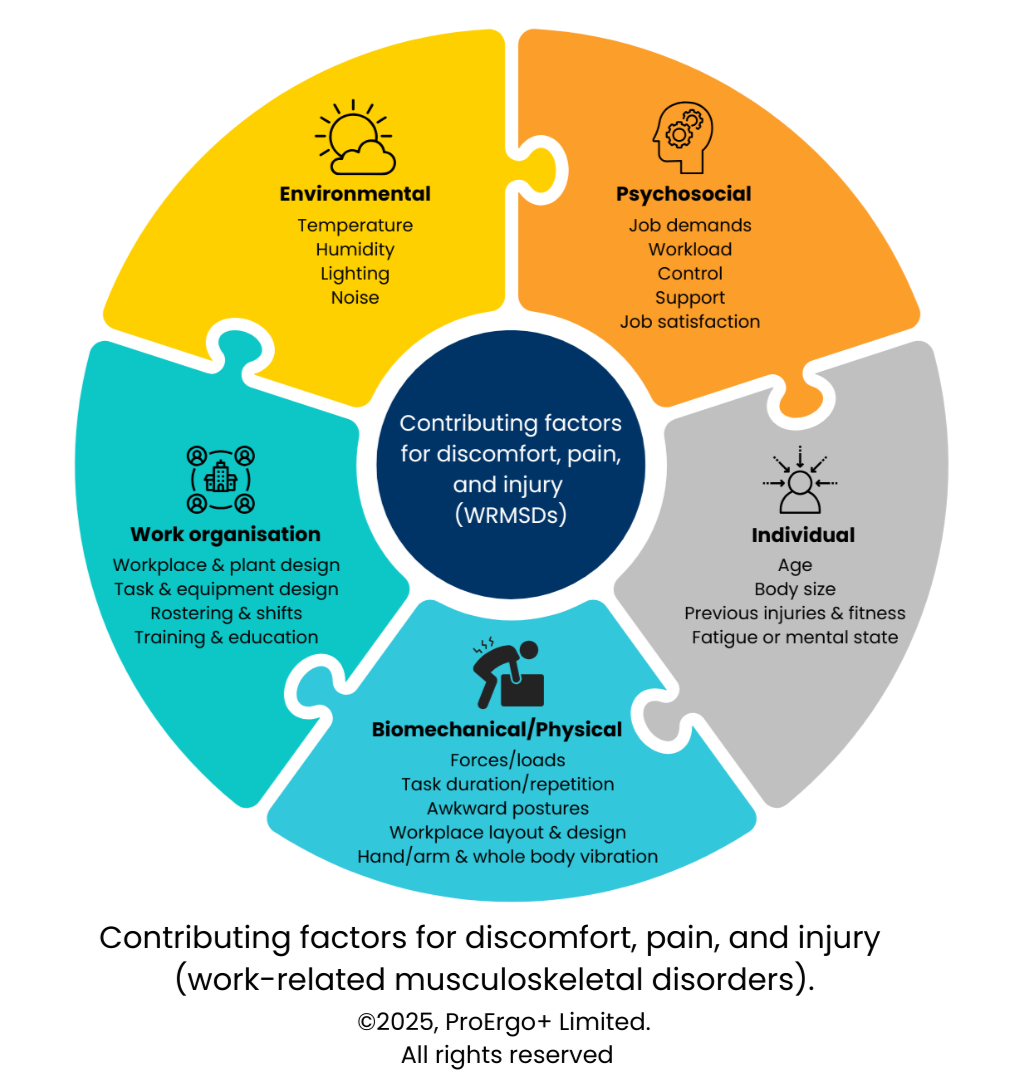
To demonstrate the complexity of how sprains and strains might develop when working in the heat, here’s an example using the Contributing factors for discomfort, pain, and injury/WRMSDs model(WorkSafe, 2023)of how the risk factors might interact:
Environmental: High heat and/or humidity.
Work organisation: How the work is organised and when breaks are scheduled.
Physical/biomechanical: Doing repetitive or physically demanding work.
Psychosocial: High workloads and pressure to meet deadlines.
Individual: Heat causing fatigue, or a lack of sleep.
We need to stop looking at psychosocial factors in isolation and see them as part of the wider work system. From an ergonomics perspective, we have known for many years that there is a strong relationship between the development of musculoskeletal injuries and both physical and psychosocial risk factors. Moving away from siloed thinking and taking a joined-up, holistic approach will help to move businesses from a reactive approach to proactive injury prevention.
The systems approach to summer work
Using good work design is about how ‘work is actually done’ rather than how ‘work is imagined’. If your business relies on administrative controls, like manual handling training as your primary control or telling workers to ‘drink more water’ in the heat, you are not addressing the root cause. This approach places the entire burden on the individual worker. Under the Health and Safety at Work Act 2015, businesses have a duty of care to identify risks and put in sufficient controls. By taking a proactive approach and understanding how work can be designed so things get done safely, you can protect your workers, and your business when working in extreme temperatures.
Practical strategies for NZ businesses
Adjust the schedule: If possible, start earlier and finish before the mid-afternoon sun hits its peak. Shifting the bulk of heavy physical labour to the cooler morning hours reduces both the physical risk and mental fatigue.

Smart recovery breaks: Don’t just wait for the scheduled lunch hour. Implement shorter, more frequent breaks that allow workers to rest in shaded or cool areas, so they can drink plenty of water, and use the bathroom when needed. This allows the heart rate to drop and the brain to reset.
Environmental controls: Depending on the type of work, it might be possible to provide temporary shade structures. Fans or air conditioning might be possible for use in manufacturing bays to increase airflow. Improving the environment is a far more effective control than just asking workers to "harden up."
Monitor psychosocial health: Check in regularly with your teams. If people are getting short tempered, or making little mistakes they normally wouldn’t, it might be time for a break. Encourage a culture where workers are empowered to speak up if they are struggling rather than take dangerous shortcuts.
Good for people, good for business
Managing these risks isn't just about compliance, it's about performance. An overheated, stressed workforce is not a productive one. By taking a holistic approach that considers the environment, how the work is organised, the body, and the mind, you should see fewer reports of pain and discomfort and a more engaged team.
If your team is feeling the heat and you want to look deeper at your musculoskeletal risk management systems, ProErgo+ is here to help. We can support you to move from reactive to proactive, designing work that keeps your people healthy and safe and your business moving forward.