
ProErgo+ Monthly Support
Your ‘on call’ expert


Maintaining progress should not be the hardest part of health and safety.
We know how it goes. You start with every intention to tackle musculoskeletal disorders, but day-to-day operations take over. Task analyses sit half-finished and reviews get pushed to next month. Before you know it, you are back to reacting to injuries instead of stopping them before they start.
Our mission is to reduce musculoskeletal disorders and improve wellbeing across Aotearoa. We cannot do that effectively if we show up for a few days onsite, complete a project and handover the report, and then walk away. Real change happens through consistent, small improvements to the work system.
Support when you need it
This service is designed for existing clients who want to keep the ball rolling, or new clients who want to see how we work together without committing to a large-scale project.
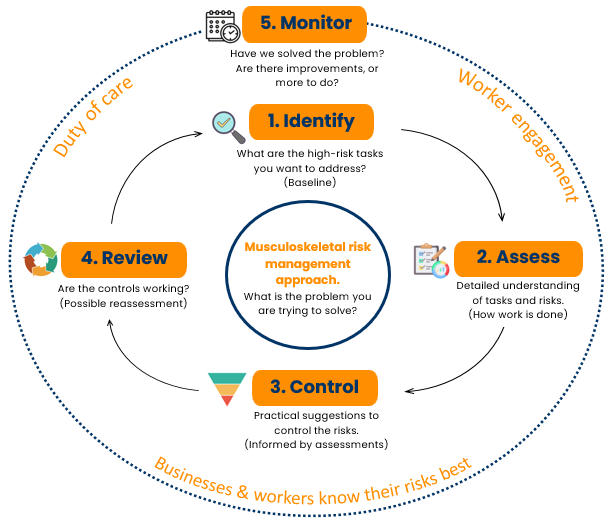
Think of it as a ‘phone a friend’ service for your business. You get access to 8 hours of professional support every month to help you stay on top of your ‘to do list’ at each stage of the risk management cycle, from initial identification, risk assessment, considering effective controls, reviewing controls, and annual monitoring.
©2025, ProErgo+ Limited. All rights reserved.
How we can support you through the risk management cycle
Step 1. Identify high-risk tasks
We help you cut through the noise to find where your risks actually are. Instead of guessing we use a systematic approach to pinpoint the tasks that need your attention most.
Data review. We can analyse your injury claims data or wearable data and suggest where to focus your resources next.
Facilitated sessions. We can lead task force sessions to identify risks or run body mapping workshops. This helps us see where people feel pain or discomfort and which tasks they believe are the root cause.
Discomfort surveys. We can administer online surveys to understand the prevalence and severity of pain your teams experience. You will receive a concise report to help guide your next steps.
Learning opportunities. We can teach you how to use screening tools or complete them alongside your teams. This builds their skills in identifying which tasks need further investigation.
Work planning. We partner with you to plan your next steps based on your available time and budget, ensuring you keep the momentum towards your goals.
Step 2. Assess the risks
Once we know where the high-risk tasks are, we need to understand exactly what is making them risky. We look beyond the obvious to see how the work is actually being done.
Collaborative risk assessment. We can review your risk assessments or complete new ones alongside your teams. This helps us identify key risk factors and suggest practical next steps for controls.
Manual task risk profile. Physical risk is often only half the story. We look at the full range of contributing risks, including psychosocial risks, to give you a clear picture of your work system.
Evidence-based planning. By gathering this detailed information, we help you develop a robust plan to control risks based on actual evidence rather than assumptions.
Knowledge sharing. During the assessment process, we explain the principles behind what we are seeing. This helps your team build their own internal capability for future reviews. Alternatively we can run training sessions to teach you how to use the risk assessment tools.
Step 3. Control the risks
Once we have a clear picture of the risks, we work with you to find the best way to eliminate or minimise them. We focus on finding practical, effective solutions that work for your specific business.
Facilitate brainstorming sessions. We lead your teams through sessions to tackle the high-risk tasks identified earlier. We then collate these ideas and research other possible solutions for you to consider.
Prioritise controls. We use the hierarchy of controls to identify which changes are likely to be most effective. This includes making short-term wins and long-term suggestions for trialling or implementing bigger changes.
Develop action plans. We help you build a solid action plan based on your priorities. We can also support your teams with project management to ensure the project does not lose momentum.
Procurement or design reviews. We provide a second set of eyes on proposed new equipment, workplace layouts, or tools. It is much cheaper to design out risk through early involvement rather than retrofitting later.
Systems and policy reviews. We can review your current procedures or training material to ensure they are practical and follow best practice. Alternatively, we can partner with you to develop custom guides tailored specifically to your organisation.
Step 4. Review the controls
This stage is about closing the loop. We look at the controls we implemented to see if they have reduced the musculoskeletal disorders we identified or if the psychosocial risks have shifted.
Review plans and project management. We work with you to review and update your action plans based on how things are actually going. If you need support, we can assist with project management to make sure the review stage occurs and the project progresses.
Review checks and timelines for continuous improvement. We use the ProErgo+ Review Checklists at specific intervals after a control has been introduced. This provides you with clear evidence of whether the control is working or if you need to look at alternative solutions.
Step 5. Annual monitoring
This final stage ensures your risk management stays relevant and effective as your business evolves. We help you look back at the year that was and plan for the one ahead.
Facilitate annual monitoring sessions. We can facilitate annual sessions with task forces to understand current issues, successes, and opportunities for improvement. We can also carry out annual body mapping sessions to see it there has been an improvement in your team’s experience of pain or discomfort.
Administer online discomfort surveys. We can administer an online discomfort survey and provide you with a short report outlining the key findings. This shows clearly if there has been improvement from the previous year.
Complete annual monitoring check. We can use our specially designed Annual Musculoskeletal Warrant of Fitness Check to help you identify what you are doing well and identify opportunities for continuous improvement.
Flexible support that fits your business
The five steps above show how we can manage risks from start to finish, but we know you might only need help with one particular area. You do not have to follow the full cycle to work with us.
The ProErgo+ Partnership is designed to be adaptable. You can follow the steps in order, or you can use your monthly hours to tackle a specific project that has been sitting on the corner of your desk for too long
Other ways we can support you
Presenting to senior leaders. We can help you translate risk datea into a clear business case that help senior leaders understand the value of addressing musculokeletal health.
HSR and worker training. We can provide targeted sessions for your Health and Safety Representatives to help them understand the work system factors that contribute to discomfort, pain, or injury.
Incident investigations. When an injury occurs, we provide a specialist view to help understand the work system factors that contributed to the event.
Manual handling training reviews. We can review your current training to see if it the material is aligned with best practice.
Policy and guidance development. We can partner with you to develop internal standards or guides so that good practice is built into your business.
No surprises, just support
Because this is a partnership, you do not need a new proposal every time a small task pops up. These are just examples of how we can help. If you have something else on your mind that needs an ergoronmics and human factors perspective, please get in touch. You simply let us know what your priorities are for the month and we get to work. It is about providing high-quality support that improves worker wellbeing and keeps your business moving forward.